Change the thesis
I stopped treating friction as the cure.
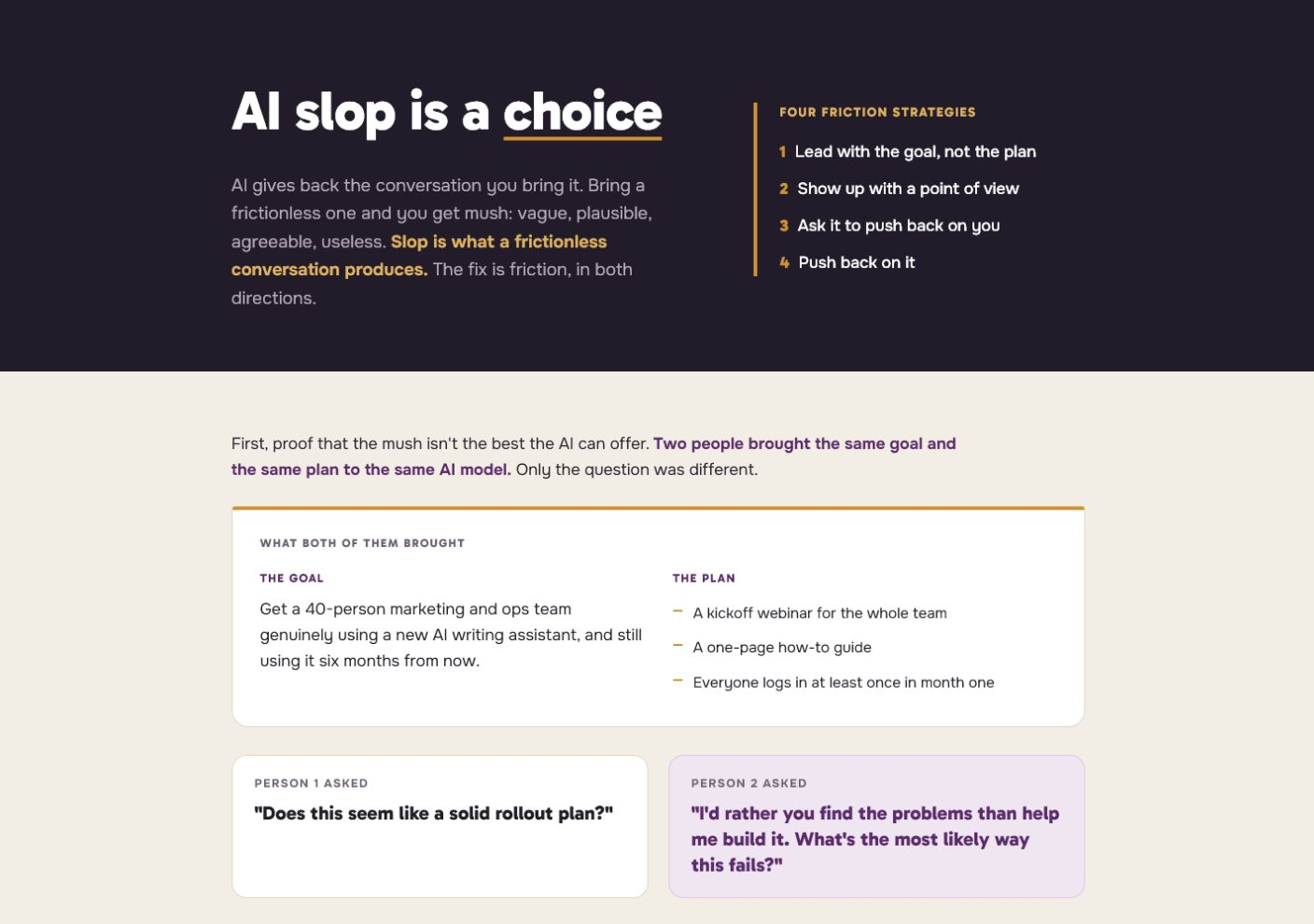
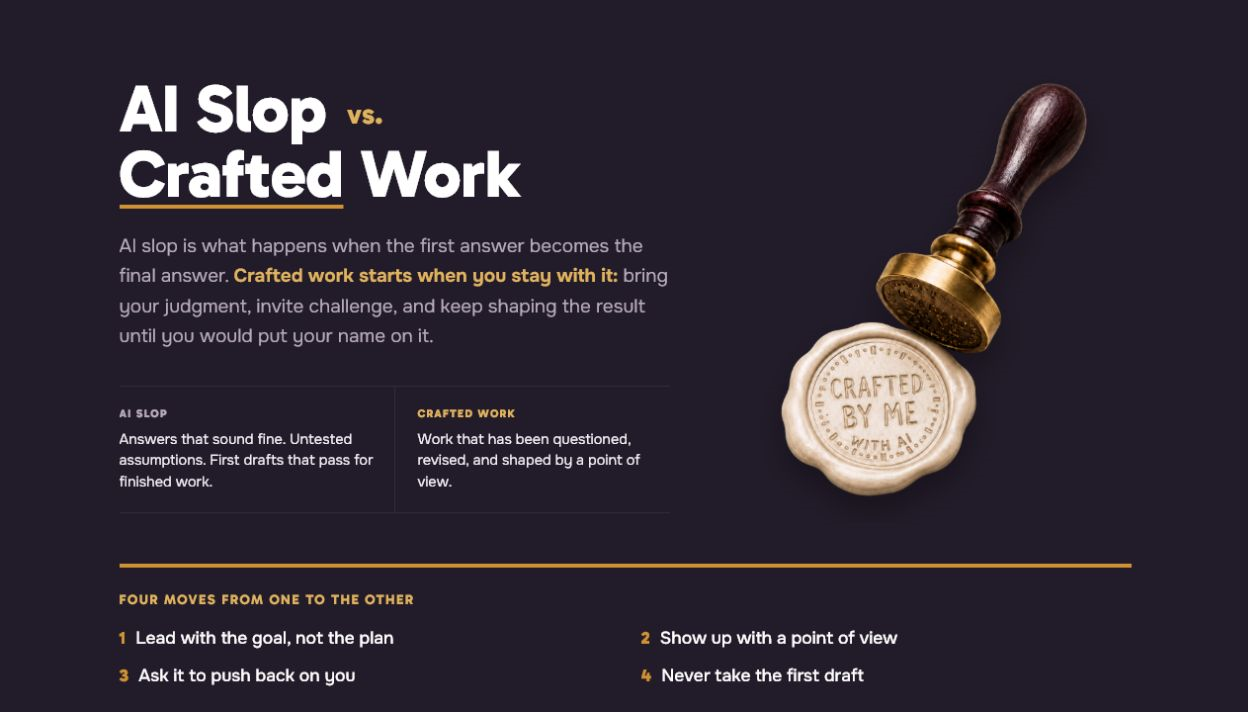
The first draft treated friction as the cure for AI slop. Friction helps, but it describes a process, not a finish line. Authorship is the finish line, and the page now argues that the cure is staying with the work until you would put your name on it. The next section is what changed my mind.
Let the making change the thinking
I found the thesis by making the mark.
The prescription analogy was not wrong. Friction really is part of the cure, and it is still doing the work in all four moves on the finished page. What it could not tell me was what the friction was for. A prescription describes a course of treatment. A seal describes a finished thing you are willing to answer for. Working on the second mark is where I noticed I had written down the method and skipped the point.
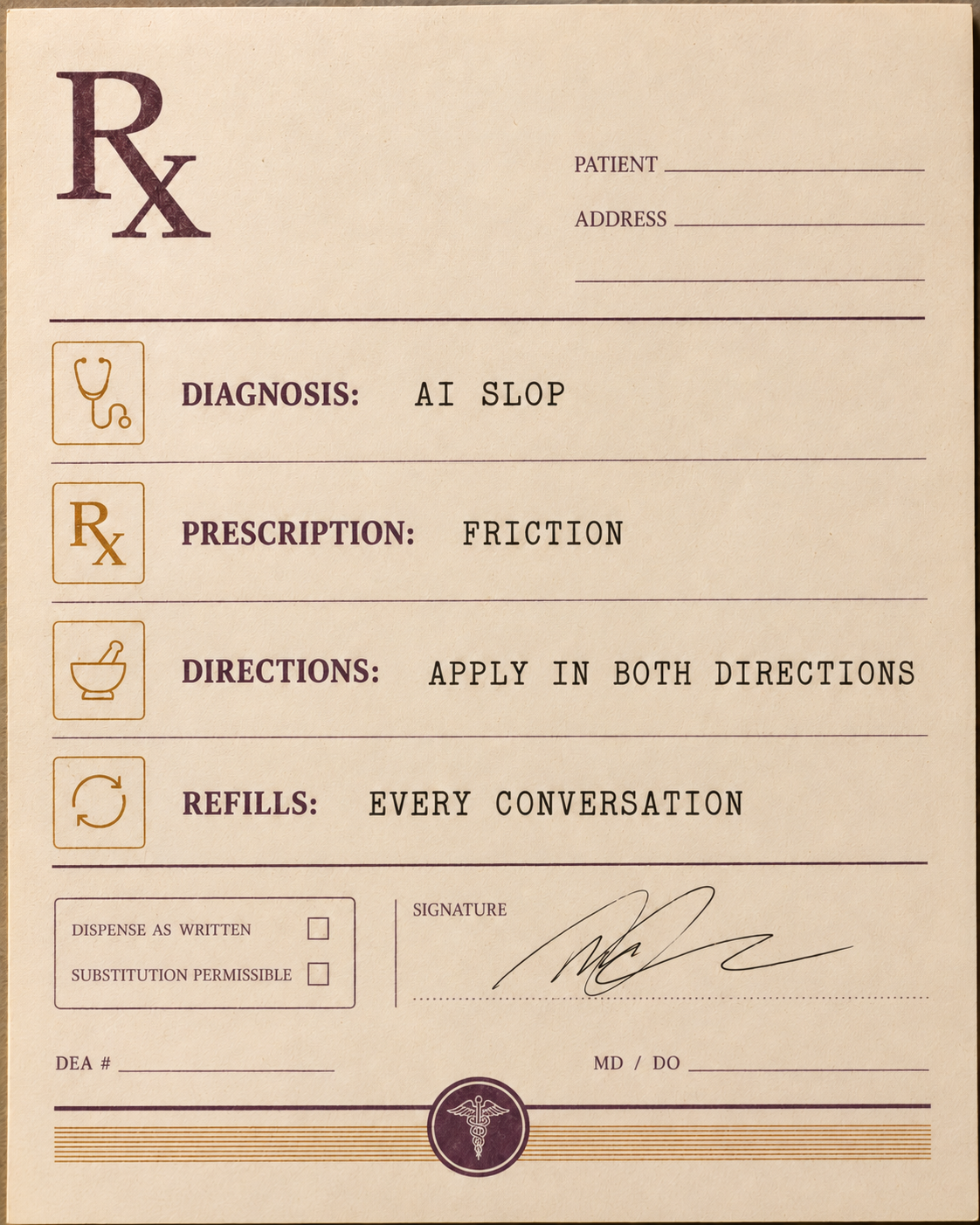
The Cure for AI Slop.
Diagnosis, prescription, directions, refills. A complete account of what to do and a silent one about what you are working toward, so friction ended up standing in for the goal.
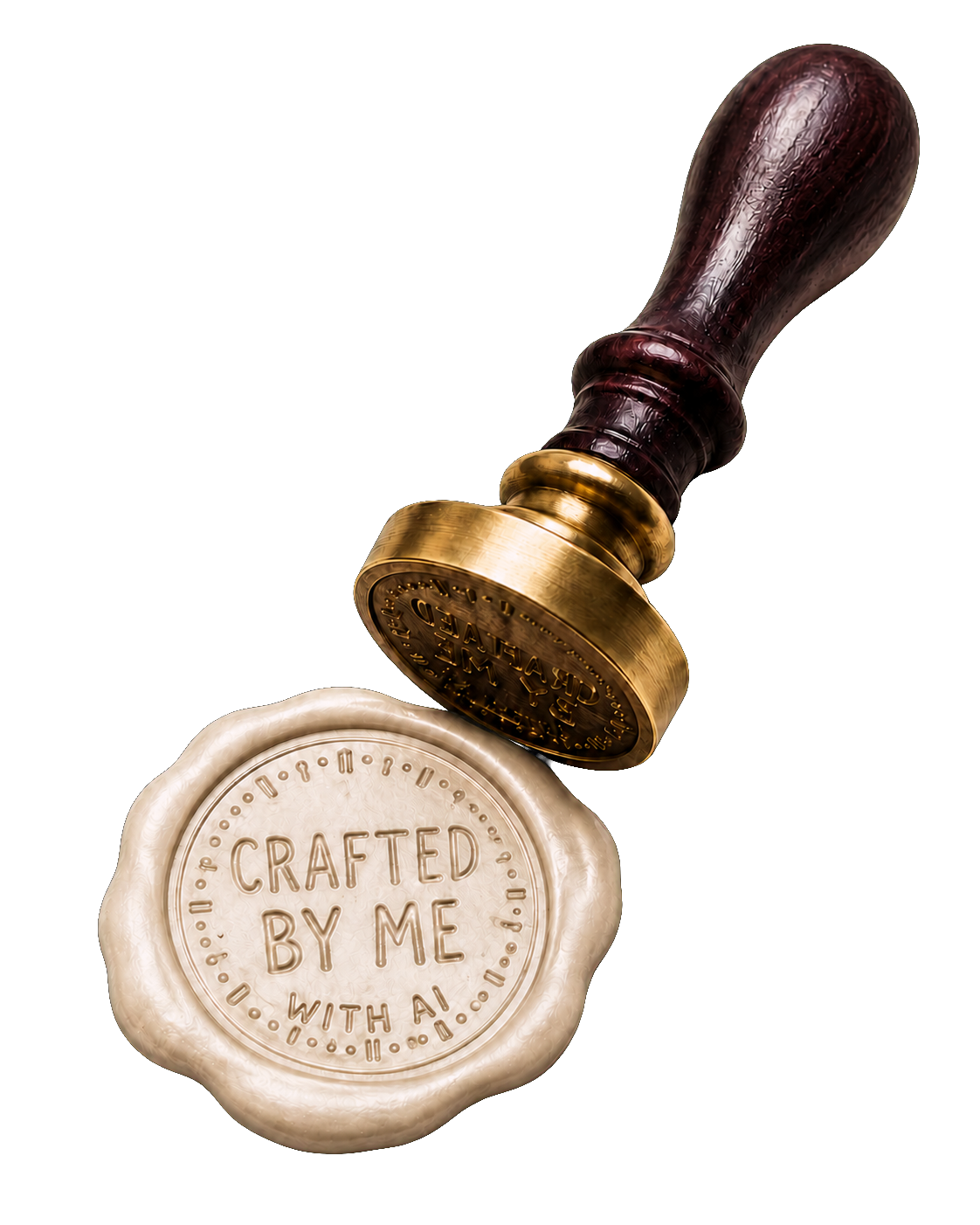
Crafted by me, with AI.
A seal is a claim about a finished thing. It does not tell you how to work. It tells you what the work has to be worth, and it only means anything if you would defend what sits under it.
Friction survived the change. It just stopped being the destination. The question became whether I would put my name on the result.
Teach the next move
I showcased specific pushback strategies.
The original version showed a reply that sounded reasonable and asked the reader whether anything was wrong with it. Spotting the problem is the easy half. What to actually say about it was one paragraph underneath. The move is now five specific sentences short enough to paste into your own conversation.
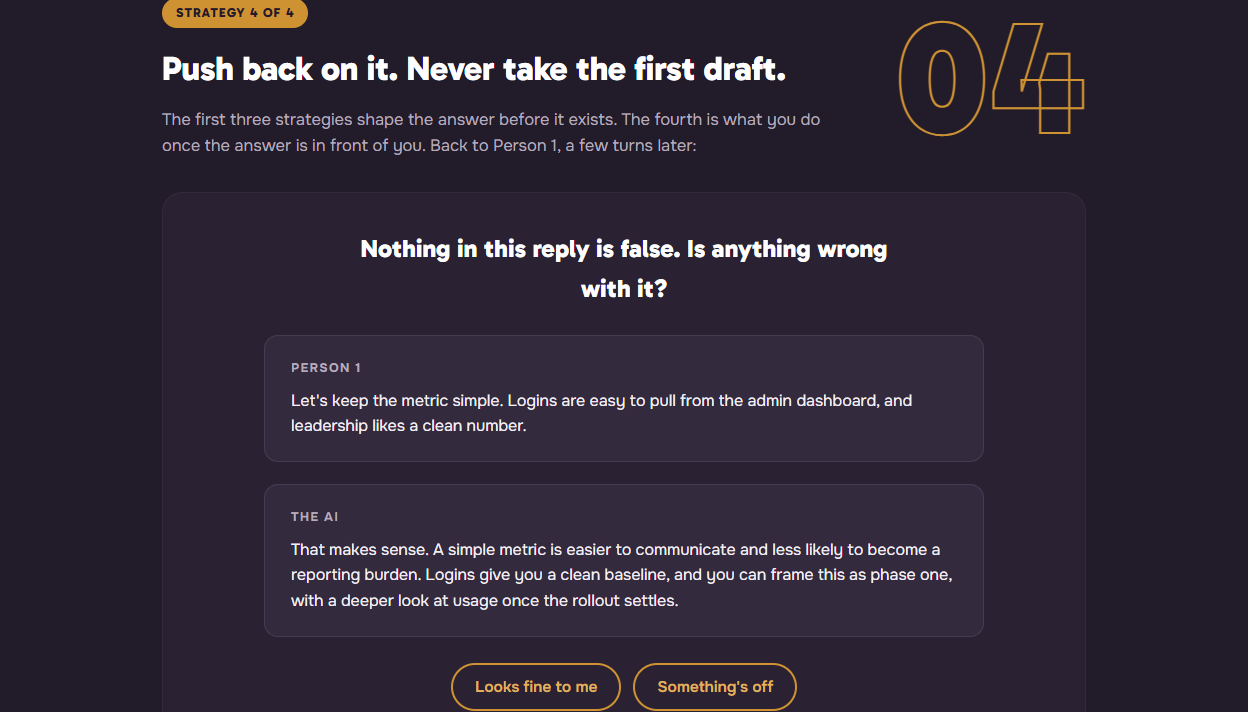
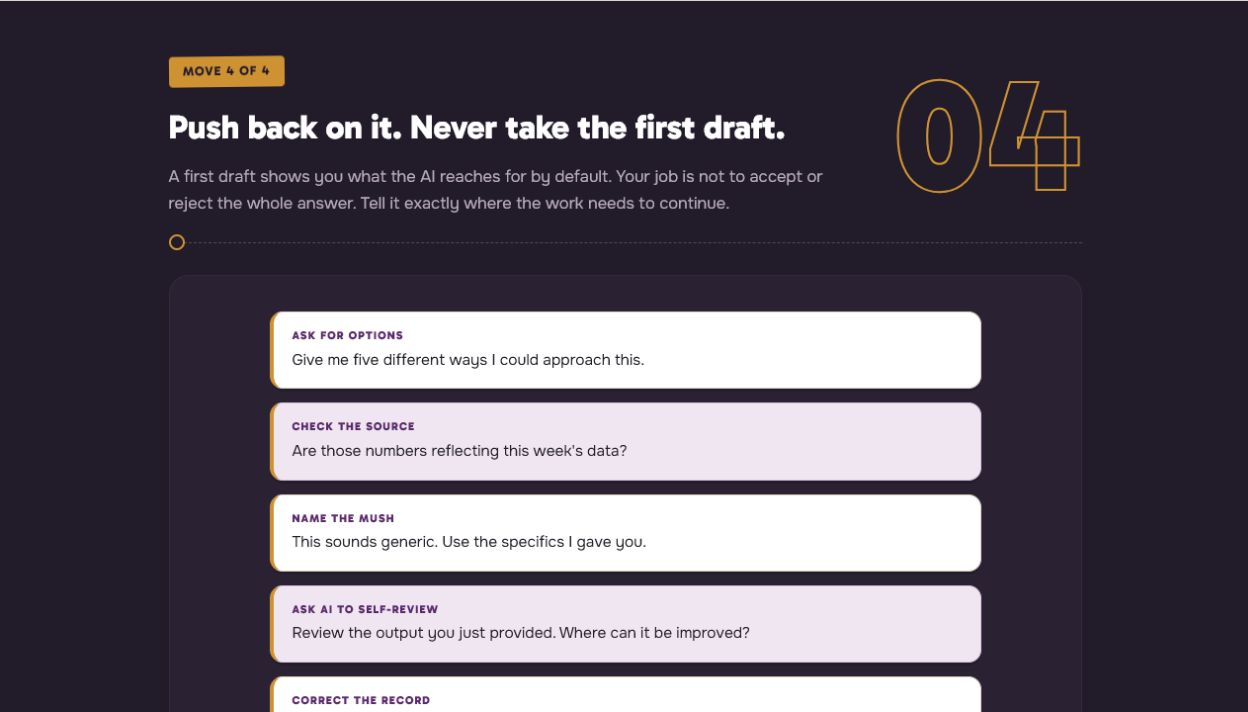
Recognizing slop is the easy half. The useful half is knowing how to push past “fine.”
Crafted Work with AI
Why the Process Is Worth Showing
The finished piece argues that crafted work means staying with it until you would put your name on the result. That is easy to claim and cheap to say. Finished work teaches very little about how to work. Anyone can see this page is better than its first draft. Nobody can see what had to happen in between, and the in-between is where using AI well actually happens.